
Steven Gurney
MLIS, University of South Florida

Welcome to my e-Portfolio!
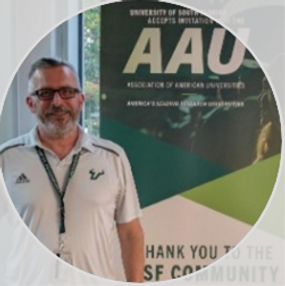
Hello! My name is Steve Gurney, and I am very pleased to share a summary of my academic and professional journey as I pursue my master’s in library and information science. After over a decade of working in public libraries, I decided to enroll in the University of South Florida's MLIS graduate program. Throughout my academic career, I have gained invaluable knowledge and experience that will enhance my life professionally and personally. Inside this e-Portfolio, you will find my academic and professional achievements, showcasing vital elements that reflect my educational journey and commitment to the field of librarianship.
This website is an e-Portfolio containing a curated group of artifacts that demonstrate my recently acquired knowledge in the areas of leadership and innovation, library systems and services, knowledge representation, and theory and praxis. Also, to provide further insight into my career, my resume is available below.

My Narrative
Even though reading, education, and access to knowledge have been a part of me from early on in my life, I never really considered a career as a librarian for myself until relatively recently. I’ve had people tell me that I should consider being an educator or something along those lines, but I was sure that I didn’t want to teach. So, I bounced around from job to job in my 20s and 30s with no real plan.
Eventually though, I got hired by the Hillsborough County Public Library Cooperative as a library aide, which is an entry level position. I then moved up to the circulation department as a library assistant. At my next career move, I was promoted to the level of Library Technical Guide 1 and worked in what HCPLC called the Hive, which is what HCPLC calls their makerspaces. They have 3D Printers, recording studios, STEM classes for kids, and other collaborative tools. After a few years of doing that,
I eventually made my way up to managing the HCPLC Interlibrary Loan Service. I did that for about 10 years, developing new ILL workflows, ILL training materials, and lead the transition from ILLiad to Tipasa. After doing everything that I could do as ILL manager, I decided that if I really wanted to move up any further, I would have to get my MLIS. So, I enrolled in the MLIS program at USF in 2023. Despite enjoying learning about library science, I was still restless.
So I began to look outside of my Library Cooperative, and I was very fortunate to land my current position as the Night Supervisor of the Nelson Poynter Memorial Library which is right in the heart of the University of South Florida-St. Petersburg. My duties include hiring, training and managing the night-time student workers, managing the ILL service and the UBorrow Program, and stacks maintenance.
I. Leadership & Innovation
Librarians are innovative problem‑solvers who are able to lead and manage through reflection, collaboration, and communication. Their leadership is grounded in a willingness to embrace new ideas, adapt to emerging technologies, and reimagine traditional workflows in ways that strengthen services and empower the communities they serve.
I.a. Students are able to evaluate critically, reflect, and problem-solve individually as well as collaboratively.
LIS 6409 Introduction to Library Administration
24 hour Hold Locker
Dr. Stites was my professor for this very interesting course. During a collaborative project, I took an active leadership role within my group as we worked together to develop a proposal addressing the ongoing decline in item hold pickups. I helped guide our discussions, ensured everyone’s ideas were heard, and kept the group focused on our shared goals. As a team, we proposed implementing a 24‑hour locker program to give patrons the flexibility to pick up their holds at any time. I contributed to organizing the problem and solution statements, coordinating research efforts, and helping delegate tasks related to identifying resources, project partners, the implementation plan, and assessment procedures. I also worked closely with my peers to develop a detailed budget and timeline and supported our environmental scan by reviewing comparable locker programs at peer institutions. By leading through collaboration, communication, and accountability, I helped the group produce a well‑researched, data‑driven proposal that demonstrated how this innovation could improve access, convenience, and overall patron satisfaction.
I.b. Students demonstrate effective communication skills.
LIS 5020 Foundations of Library & Information Science
Roles of Information Professionals Poster
In this course, Professor Ray Baker challenged our class to think critically about the many roles information professionals take on by having us design poster presentations aimed at a public audience. Through Professor Baker’s communications to the class and assigned readings, we gained a deeper understanding of how librarians function not only as information providers, but also as educators, managers, advocates, and community partners. Using the information he presented, we translated complex professional responsibilities into a visually engaging poster that communicated the value of librarianship in a clear and meaningful way. This assignment required us to synthesize course content, identify key messages, and consider how design, language, and imagery could be used to effectively explain what librarians do to individuals who may not be familiar with the profession. As a result, the poster project strengthened our ability to communicate professional concepts to the public while reinforcing the diverse and evolving nature of information work.
I.c. Students participate in professional and community engagement activities in the field.
LIS 6603: Basic Information Sources and Services
Librarian Interview Assignment-Jessica Miller
For this assignment, Dr. Richard Austin had our class conduct an interview with a Reference Librarian. I chose to interview my supervisor at the time, Jessica Miller, to gain a deeper understanding of what high‑quality reference service looks like in professional practice. Speaking with her allowed me to engage directly with an experienced reference librarian and explore how reference work extends beyond answering questions, to building relationships with users and the community. Through our conversation, I learned how professional engagement plays a critical role in reference service, including understanding user needs, selecting appropriate resources for different populations, and adapting service approaches based on context and format. Jessica shared examples of real reference questions she has received and explained how evaluation, communication, and accessibility shape effective service delivery, including the use of digital reference options. This interview helped me connect course concepts to real‑world practice and reinforced the importance of professional interaction, responsiveness, and user‑centered service in modern librarianship. And, on a personal level, I got to understand her on a level that I didn’t think was possible.
I.d. Students demonstrate leadership skills and innovation in a diverse and global environment.
LIS 6271 Research Methods for Library and Information Science
Research Proposal, Draft 2 (Final)
In Dr. James Andrews’s class, I participated in a group project whose goal was to propose an upgrade to an academic library computer system for greater accessibility for a diverse campus population which included individuals facing language barriers, cultural challenges, and physical disabilities. I helped guide the group in identifying accessibility as both a technological and service‑oriented issue, encouraging collaborative problem‑solving and inclusive thinking throughout the project. By facilitating discussion and coordinating research efforts, we supported the development of innovative solutions such as adaptive hardware, multilingual interfaces, accessible software, and staff training focused on cultural competency and disability awareness. I also worked to ensure that our proposed solutions were realistic and responsive to user needs while aligning with institutional capabilities. Through the group’s organization, synthesis of our individual research, and presentation of findings, I helped transform complex accessibility challenges into a cohesive, user‑centered proposal. This experience strengthened my ability to lead collaboratively while reinforcing the importance of innovation and equity in library technology and service design.
II. Systems and Services
Librarians must understand systems and technologies that facilitate the management and use of information resources to serve their patrons' diverse needs.
II.a Students identify and analyze diverse information needs of individuals and communities.
LIS 5937 GIS for Information Professionals
Project Submission - Create a Story Map
For my technology elective, I took GIS for Information Professionals. I am so grateful for the experience! Professor Kim Lersch prepared me for designing my portfolio by making me familiar with site-building platforms such as ArcGIS. Geographic Information Systems (GIS) have become an increasingly valuable tool in this work, enabling libraries to visualize spatial data, analyze community demographics, and make evidence‑based decisions about services and outreach. By integrating GIS into collection development, programming, and strategic planning, librarians can better understand the geographic dimensions of information needs and design services that more effectively reach the populations they serve.
For our final project, we were required to design a story map about whatever subject we wanted. I decided to design a story map based on my love of monster movies. My project explored the real historical locations and figures that inspired iconic horror characters: Bran Castle and the Dracula legend, Castle Frankenstein and Johann Konrad Dippel, the Pyramid of Djoer and the historical figure Imhotep who was the basis for the Mummy, and the case of Peter Stubbe, the “Werewolf of Bedburg.” Bringing these sites together in a spatial narrative allowed me to blend research, storytelling, and GIS tools into a digital exhibit that showcased how geography and folklore intersect in popular culture. Ultimately, Dr. Lersch’s class showed me that Information Science is not only important and informative, but it can be fun too.
II.b. Students evaluate and select print and digital information resources and systems to
meet user needs.
LIS5937 Rare Books/Special Collections
Present a Major Collection - African American Collection at the Seattle Public Library
This report I wrote for Dr. McCook’s class illustrates my understanding of how the librarians at the Seattle Public Library’s Douglass Truth Branch continually evaluated and selected print and, later, multimedia resources in response to the evolving needs of their community. As the Central District’s demographics shifted over the twentieth century, the branch adapted its collections the gradual shifting demographics of the neighborhood it serves from early multilingual holdings serving Jewish and Japanese immigrant populations to the intentional development of the African American Collection beginning in the 1960s. Selection decisions were not driven solely by traditional library standards, but by direct community engagement, circulation patterns, and advocacy from local organizations and residents who identified gaps in representation and access. Librarians recognized that existing systems and collections were inadequate for a changing patron base and worked collaboratively with community groups to acquire culturally relevant print materials, local ephemera, and later audiovisual resources that documented lived experience as well as scholarship. Over time, the expansion to include diverse formats and regionally specific materials reflects an ongoing evaluative process in which collection development and information systems were aligned with community identity, historical preservation, and user needs rather than static notions of neutrality or completeness.
II.c. Students understand and use appropriate information technology for information services.
LIS 6711 Organization of Knowledge I
Week 4 BIBFRAME Assignment
In this assignment, Dr. Niu had our class use the MARVA BIBFRAME linked data editor to create a full descriptive record for the course textbook, The Organization of Information, following the provided guidelines for creating a new BIBFRAME record using the demonstration editor. Working within the MARVA interface, I recorded bibliographic information drawn from the Library of Congress catalog and translated that metadata into a structured linked‑data format rather than a traditional MARC record. The process required me to understand how works, instances, and related entities are represented in BIBFRAME and how metadata values can be entered manually when authority file lookups are unavailable. In addition to building the record, I generated the RDF/XML output of my data, which reinforced how descriptive information is encoded for machine readability and interoperability across information systems. Because the MARVA editor functions as a demonstration environment, the assignment also emphasized documenting work through screenshots and file exports, underscoring real‑world considerations of data preservation and system limitations. The result demonstrates my knowledge and practical use of creating a full descriptive record using modern information technology.
III. Knowledge Representation
Students gain a strong foundation in theoretical frameworks from LIS and related disciplines, enabling them to apply these perspectives to professional work in research, organization, management, and information access.
III.a. Students analyze, organize and describe various formats of information objects.
One of the most challenging courses that I have taken in the MLIS program is Dr. Niu’s Organization of Knowledge I course. We covered a variety of subjects: taxonomies, classifications, controlled vocabularies, ontologies, and metadata. One of the subjects of the course that interested me the most was taxonomies.
LIS 6711 Organization of Knowledge I
Assignment 5: Taxonomy
Taxonomies in information science provide structured systems for organizing knowledge. This allows librarians to bring order and consistency to large and diverse collections. Librarians use taxonomies because they create predictable pathways for discovery. This helps patrons navigate information efficiently.
In Dr. Niu’s class, I organized several of my personal items into a structured taxonomy that included books, media, and various personal items. I developed a hierarchical classification system with multiple levels that grouped materials by two broad categories (essential and luxury items) and subcategorized them into more specific classifications. This assignment helped me understand how taxonomies function as practical tools in information organization and reinforced how classification can support easier discovery, better management, and more meaningful organization.
III.b. Students identify and apply best practices in the use of different technologies for knowledge representation.
LIS 5937 GIS for Information Professionals
Wayback Imagery - Reveal Lake Shrinkage Due to Severe Drought
ArcGIS connects and illustrates data through the discipline of geography. It is capable of sharing all types of data through managing, analyzing, and mapping. Information professionals that use ArcGIS to understand and analyze their data in a geographic context have a distinct advantage when it comes to servicing the community.
The World Imagery Wayback app works like a digital time machine for maps. It stores many older versions of the World Imagery map and lets people see how places have changed over time. The app organizes these maps by details like when they were made, where they show, and how detailed they are, so users can easily find and compare different versions. Tools such as timelines and side‑by‑side comparisons make it simple to look at changes visually. This helps people save older information, keep track of different versions, and find what they need more easily. Overall, the app shows how maps and geographic tools can be organized and shared in ways that make information easier for everyone to access and understand.
In Dr. Lersch's class, we were given an assignment to configure a web map with bookmarks to several major lakes that are shrinking due to severe drought. The learning outcome was to create a story using imagery layers from the World Imagery Wayback app to make interactive swipe maps to compare the before and after imagery of the lakes.
IV. Theory & Praxis
Students gain a strong foundation in theoretical LIS frameworks and related disciplines, enabling them to apply these perspectives to professional work in research, organization, management, and information access.
IV.a: Students will describe applications of quantitative and qualitative research methodologies in library and information science.
LIS 6511 Collection Development
Collection Development Policy
One of the reasons that I stopped working at the Hillsborough County Public Library Cooperative was that I felt that I had learned everything that I could at my previous position. And I had learned all of these new things in the MLIS program, but I was unable to apply any of that knowledge to my then-current job. Now that I am a supervisor at USF-SP's Nelson Poynter Memorial Library, I can use what I learned from Dr. Taylor's class, and I can apply it to my role as a member of the Library's Programmatic Planning Group, where we are making decisions on how the collection is developing.
Currently, I work as part of the programmatic planning group at the Nelson Poynter Memorial Library, where I help manage the collection through a coordinated, plan driven approach. My role focuses on aligning collection management decisions with the library’s broader programmatic goals, ensuring the collection is intentionally developed, well maintained, and responsive to institutional priorities. Through collaborative planning, with my supervisor, Christine Dunleavy and other members of the group, I support thoughtful stewardship of library resources so the collection remains sustainable and aligned with the library’s mission.
IV.b. Students will identify opportunities for research and develop plans for research in applied settings in library and information science.
LIS 5937 Graphic Literature For Libraries
Module 9 Assignment: Programming Activity
Graphic novels are increasingly used in education because they combine visual storytelling with complex ideas in a way that supports comprehension, engagement, and critical thinking. Their blend of images and text helps students grasp abstract concepts, follow historical events, and interpret multiple layers of meaning, making them especially effective for visual learners and multilingual classrooms. Educators use them to teach everything from literature and history to science and social issues, as the format encourages close reading, empathy, and discussion while lowering barriers for students who may struggle with traditional texts.
Completing the LIS 5937 Module 9 Assignment: Programming Activity strengthened my ability to intentionally integrate graphic novels into programmatic planning and collection development discussions. Assistant Dean of the Nelson Poynter Memorial Library, Christine Dunleavy and the rest of our programmatic planning group is planning to articulate a clear rationale for graphic literature–based programming. The assignment’s emphasis on defining purpose, choosing specific titles, and aligning activities with learning and engagement outcomes mirrors the real-world collection development we are implementing at Nelson Poynter Memorial Library. My Graphic Novel Book Club proposal demonstrates how curated graphic novel collections can function as flexible programmatic tools that support literacy, STEM exploration, health education, and historical understanding for readers of all ages, as opposed to serving solely as recreational materials. By outlining concrete activities, title selection processes, and evaluation metrics, this project provides a transferable model for collaborative planning conversations about how graphic novels can be developed, justified, and sustained within a broader programming and collection strategy that we are planning to use in the very near future.
Statement of Integrity
-
All artifacts, narratives, and examples presented in this e-Portfolio are my original work, unless explicitly noted as part of a group or team project. This portfolio has been prepared exclusively by me.
-
To safeguard the privacy of its contents, I am submitting the e-Portfolio through Canvas for this course, or sharing the URL solely with my assigned advisor.
-
Before making this portfolio publicly accessible, I will take care to protect the privacy of individuals and institutions by omitting any identifying information related to team members.
-
To the best of my knowledge, all clip art used in this portfolio is free from copyright restrictions and available for use without permission.
-
I affirm that all content reflects my original scholarship, and I have adhered to the academic integrity policies and ethical standards of the University of South Florida.
